
A dormant lawn can look worrying during a hot, dry stretch in Mankato. The first brown area may appear beside pavement, across an exposed slope or throughout an open yard. However, color alone cannot tell you whether the grass is resting, severely damaged or affected by another problem.
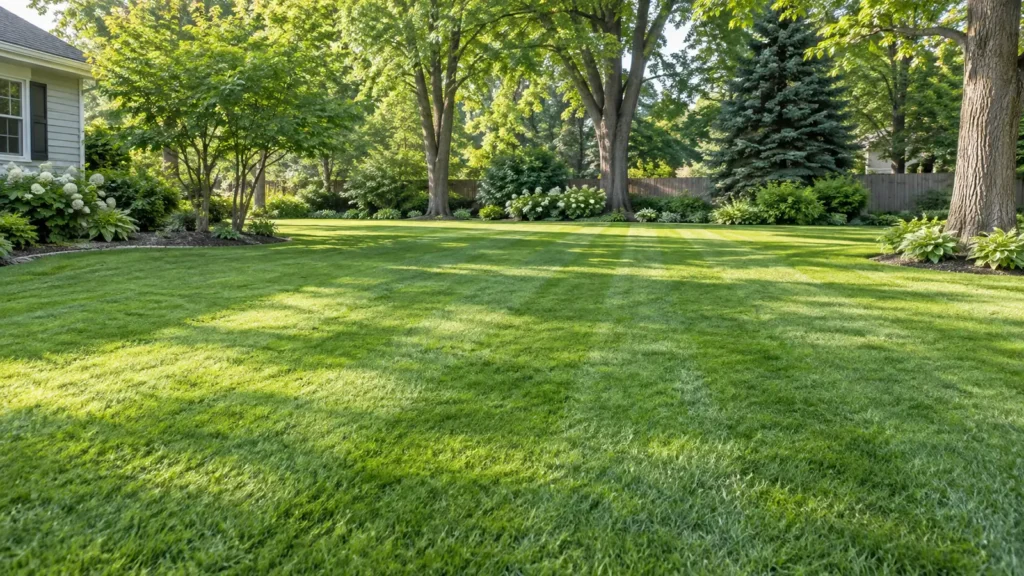
Before making a repair plan, collect the recent history. Note rainfall, watering, mowing and heavy use. Then compare the brown area with the rest of the property. The pattern gives a more useful starting point than the shade of brown.
What summer dormancy means
University of Minnesota Extension explains that Kentucky bluegrass can turn brown during drought while the base and roots remain alive. It may green up when moisture returns. Its diagnostic guide also cautions that severe, prolonged heat and drought can cause damage that does not fully recover.
Therefore, do not promise yourself that every brown lawn will return unchanged. Grass species, site conditions and the duration of stress all affect the picture. A broad photograph helps document the current condition without requiring an immediate conclusion.
Compare the pattern with the recent weather
Start with three views: the whole lawn, the boundary of the brown area and an unaffected section. Record the date. If possible, include a landmark such as a path or bed edge so you can repeat the photographs later.
- Did browning begin during a dry period or after another event?
- Is the change widespread or limited to separate patches?
- Do shaded and open areas look different?
- Has one route received repeated foot or equipment traffic?
- Does the lawn change after rainfall or resumed growth?
Keep uncertain details marked as uncertain. For example, brown grass near a walkway can have several causes. Our July brown-patch guide explains why the location deserves a closer look before you choose a response.
Reduce avoidable stress while you assess it
Extension recommends limiting traffic and postponing mowing and fertilizer on drought-stressed turf. A maintenance calendar should respond to actual growth. A planned mowing date does not mean the lawn has enough new growth to justify the usual visit.
If you use regular lawn mowing, contact your provider about changing conditions. Explain whether the entire property has slowed or only part of it. Ask how the next visit will be handled instead of requesting a very short cut to make the dry lawn look uniform.
Separate watering decisions from color expectations
Some homeowners want to conserve water and accept temporary browning. Others are caring for new plants or a separate repair area. State your goal clearly before changing the routine. A single setting may not suit every part of the landscape.
Our guide to watering established lawns explains how rainfall and soil observations fit the decision. New seed and newly installed sod need their own guidance. Avoid copying their watering schedule onto an established lawn simply because the mature grass has changed color.
Reassess before planning aeration or repairs
Late summer may offer a useful opportunity to review the lawn, but it is better to assess its condition first. Identify what has resumed growth and what remains bare. Keep that distinction in your photos and in any request for maintenance.
When discussing core aeration, mention the stress history and current moisture conditions. Aeration should not be presented as an emergency cure for brown grass. Persistent gaps may need a separate diagnosis and repair plan before the next maintenance task makes sense.
A useful record beats a quick label
Save dated photos and a brief list of changes. Include any product applications and the dates of separate lawn work. If you later seek specialist advice, bring that record along. It helps distinguish a response to weather from a pattern that continued despite different conditions.
Read UMN Extension’s drought lawn guidance and its diagnostic examples near pavement. To discuss routine mowing or an appropriate future aeration visit, request a free estimate with your property’s current conditions.