
Deciding whether to mulch or remove leaves starts with the lawn beneath them. A few dry leaves scattered through standing grass are different from a wet layer covering most of the surface. Planning ahead makes that distinction easier when fall leaf drop begins in Mankato.
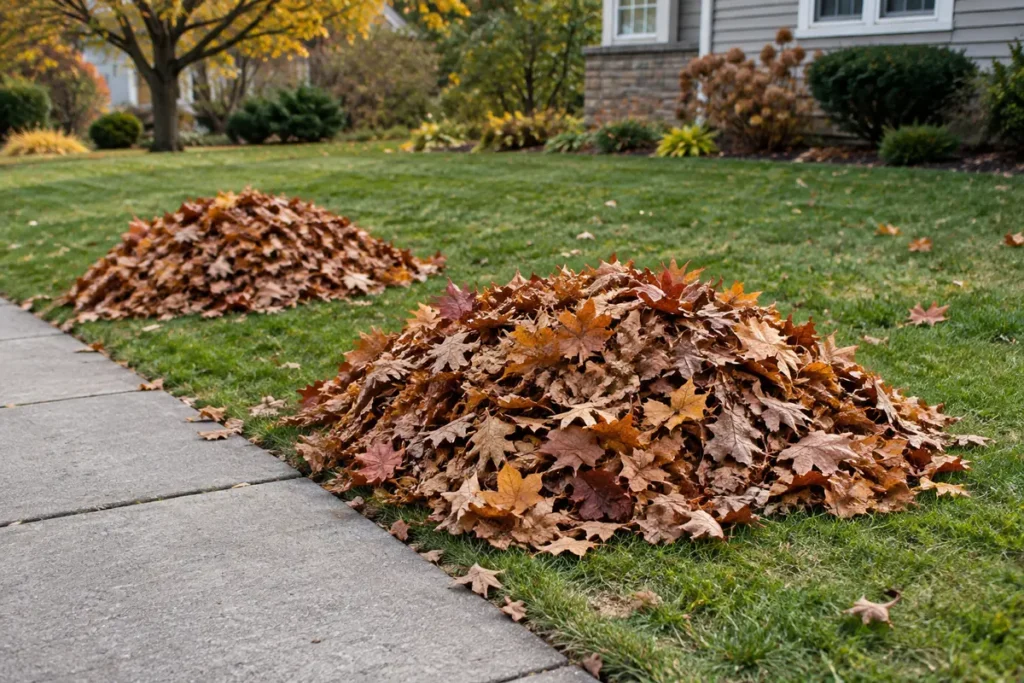
Instead of choosing one rule for the entire property, identify the lawn, garden beds and walking routes separately. Each space may have a different goal. Clear instructions help a seasonal cleanup reflect the way you use the yard.
When mulching can fit the lawn
University of Minnesota Turfgrass Science supports mulching manageable amounts of dry leaves into turf. Small pieces can break down and return organic material and nutrients. Its guidance recommends regular attention rather than waiting for a heavy accumulation.
Look at the result after the leaves are chopped, not only at the number that fell beforehand. Can you still see the grass surface clearly? Are pieces distributed across the area or gathered in thick strips? A photograph from above can help show the difference.
Know when the amount becomes excessive
UMN Turfgrass Science suggests collecting leaves when less than about half of the lawn remains visible after mulching. Excessive cover can smother turf and increase winter stress. That gives you a practical observation to discuss instead of relying only on how tidy the yard looks from the street.
Also check fence lines, corners and low spots. Material can collect unevenly even when most of the lawn looks clear. Note those areas before arranging service, especially if they are hidden behind a garage or a dense planting bed.
Separate leaf quantity from visit timing
A property with several tree species may not receive all its leaves at once. A single later visit may suit one yard, while another owner wants to discuss more than one cleanup. Explain what you want the visit to accomplish before choosing the timing.
Our fall cleanup service can be discussed around the areas and material present. Mention whether neighboring trees continue to send leaves into the property. A cleanup addresses the agreed work at the time of the visit, so later leaf fall should be part of your expectations.
Make separate choices for planting beds
Leaves retained in a designated bed have a different purpose from a thick layer left over lawn grass. Mark beds where you want cover preserved. Also identify delicate plants and any areas receiving advice from a separate garden specialist.
Our article about cleanup with habitat in mind offers a way to discuss those spaces. The useful approach is deliberate selection. A request to clear everything can be just as vague as a request to leave every leaf.
Include paths and drainage routes
Walkways, patios and the route to a garage deserve their own note in the estimate. Identify where wind gathers loose material and which paths you need kept accessible. Include public or shared sidewalks when explaining the requested boundaries.
Also watch the roof-water route. If leaves collect near the building, record any visible gutter overflow separately. Our gutter observation guide explains what you can check from the ground before requesting additional service.
Questions to settle before a visit
- Which lawn areas and planting beds are included?
- Where should leaf cover stay?
- Does the estimate include collection, removal or another agreed arrangement?
- Are gates and staging areas available?
- Would one visit meet your goal, or should you discuss a second?
- Which routes need to remain clear?
Photos make these questions easier to answer. Send both a wide view and closer images of the heaviest buildup. If you have a preferred compost location, identify it before work is arranged rather than assuming collected material will be placed there.
Coordinate the remaining mowing season
If you use regular mowing, discuss how leaf handling fits the remaining visits. Do not assume a routine cut includes a full property cleanup. Clear scope helps explain the difference between managing light leaf fall and collecting a larger accumulation.
Read University of Minnesota Turfgrass Science’s leaf mulching guidance and UMN Extension’s late-fall lawn checklist. To plan seasonal help for your Mankato property, request a free estimate with your cleanup priorities.