
Mushrooms in lawns often attract more attention than the grass around them. A few caps can appear after rain, disappear, and return somewhere nearby. Before changing your Mankato lawn routine, look at the surrounding turf and the conditions that came before the mushrooms appeared.
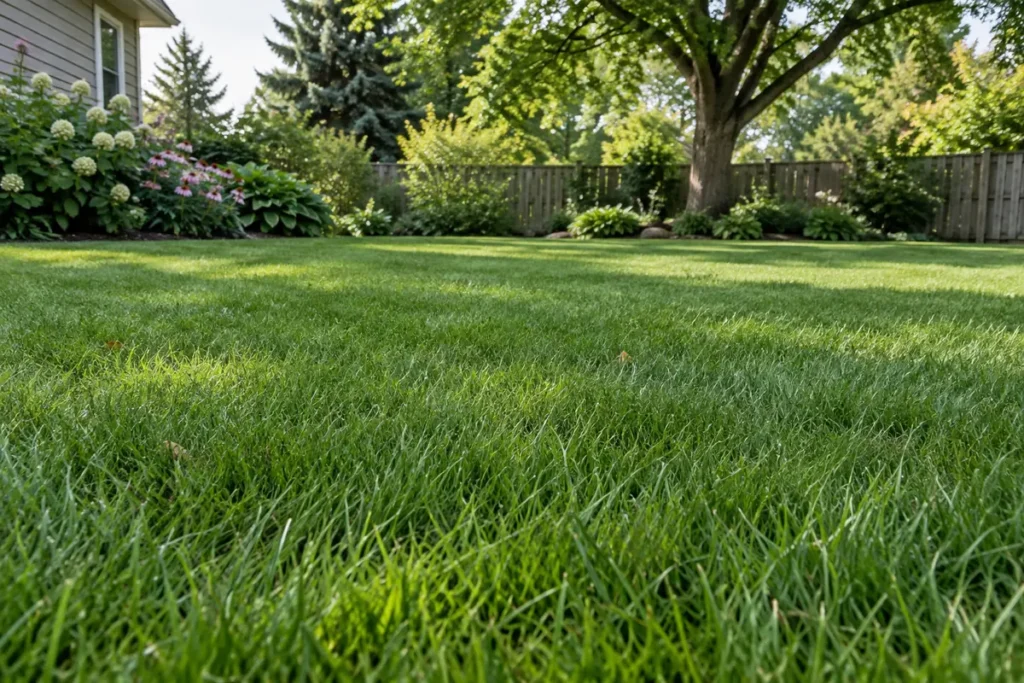
The useful first question is whether the grass itself is declining. Mushrooms alone and mushrooms beside damaged grass are different observations. Record both instead of assuming that every visible fungus is attacking the lawn.
Why a wet week can bring mushrooms
University of Minnesota Extension explains that mushrooms are the fruiting bodies of fungi. Those fungi often break down organic material such as old roots and plant debris. Moist conditions favor their appearance, and most lawn mushrooms do not indicate turf disease.
That background helps put an isolated appearance in perspective. It does not identify the species or establish whether a particular mushroom is safe. Keep identification questions separate from the decision about mowing, watering or collecting visible material.
A short observation checklist
Make notes while the mushrooms are visible. A record made after they disappear may miss the pattern that prompted your concern.
- Photograph the whole area and a closer view without disturbing it.
- Record recent rain and any watering you provided.
- Note whether caps are scattered, clustered or arranged in an arc.
- Check whether nearby grass is green, thin, matted or discolored.
- Mark any former tree location or old stump you know about.
- Compare the same location after the weather changes.
These notes give an adviser useful context. They also help you explain the issue to a maintenance provider without asking someone to diagnose a mushroom from a brief description. Do not use a lawn photograph to decide whether a mushroom is edible.
What an arc or ring may mean
Extension describes fairy rings as circles or arcs associated with fungi and sometimes darker, more vigorous grass. A ring is worth recording, but its presence does not mean every part of the lawn needs the same response. Show the whole pattern when asking for guidance.
Compare it with other changes in the yard. For example, shade and repeated traffic may explain thin turf nearby even if mushrooms appear there too. Our guide to grass under trees offers a separate set of questions for those locations.
Review moisture before adding another task
If you water the lawn, review recent rainfall first. Extension includes reducing unnecessary irrigation among its suggestions for limiting mushrooms. That is different from deliberately drying every part of a property. Established grass, new seed and garden plants may have different needs.
Our established-lawn watering guide can help organize that review. Write down what you actually changed and when. Changing several things at once makes it harder to understand why the yard looks different a week later.
Questions about maintenance
Should I mention mushrooms before mowing?
Yes. Identify the location and say whether you want to discuss collecting visible material. When arranging lawn mowing, include any access restrictions or areas you have marked for further inspection. Agree on the work instead of assuming a mowing visit includes fungal identification or treatment.
Will aeration make mushrooms disappear?
No maintenance visit should be presented as a guarantee that fungi will disappear. Extension lists fall aeration as a way to address compaction and drainage conditions. Whether that fits your lawn is a separate discussion from identifying the mushrooms themselves.
If the ground has recurring maintenance concerns, ask about core aeration and explain what you have observed. Persistent standing water, grading issues or damage to the grass may need investigation beyond a routine aeration request.
What information should I send?
Include the property address, dated photos, recent weather and the condition of the surrounding grass. Mention any former tree stump. This gives the conversation a specific starting point without requiring you to supply a diagnosis.
For the underlying lawn guidance, read UMN Extension’s mushrooms in lawns article. To plan mowing or discuss aeration at your Mankato property, request a free estimate from CI Lawn Care.